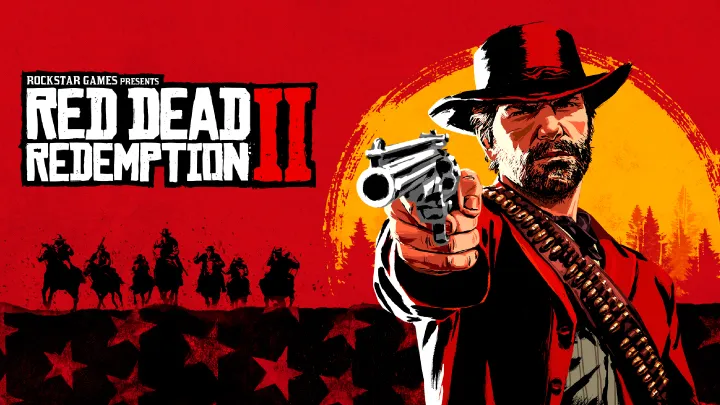



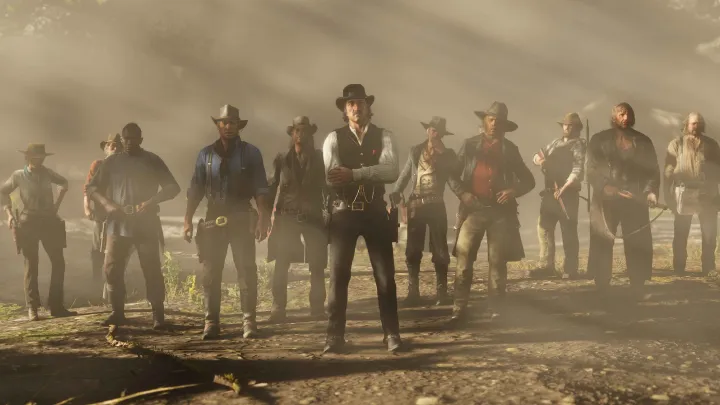
Red Dead Redemption 2 is often praised for its sprawling vistas and technical fidelity, but its true heart lies in the agonizingly slow dissolution of the Van der Linde gang. Unlike many open-world titles that offer a power fantasy, Rockstar Games crafted a narrative centered on the inevitability of decay. The game is a meticulous study of a man trapped between a dying era of lawlessness and the cold, encroaching grip of modern civilization. To understand RDR2 deeply, one must look past the gunfights and see it as a tragedy of "determinism"—the philosophical idea that all events, including moral choices, are determined by previously existing causes.
Arthur Morgan is a character defined by his loyalty, a trait that becomes his ultimate undoing. As the player, you navigate his final months, witnessing a metamorphosis that is as much about biological failure as it is about spiritual awakening. This article explores the specific mechanics of Arthur’s downfall, the narrative weight of his illness, and the deconstruction of the American Outlaw myth. We will analyze how the game uses time, health mechanics, and dialogue to force the player into a state of mourning long before the final credits roll.
2. The Weight of the Past: How Blackwater Pre-Determined the End
The events in Blackwater, which occur before the game even begins, serve as the "Original Sin" of the narrative. This failed ferry heist is the catalyst that strips the gang of their security and forces them into the mountains. For Arthur, Blackwater represents the moment the "Dutch Plan" began to crack. Deep analysis of the game’s dialogue suggests that Arthur’s skepticism was present from the start, yet his deterministic bond to Dutch Van der Linde prevented him from acting on his intuition. This creates a psychological tension that defines the early chapters of the game.
Philosophically, the gang is running away from a future that has already caught them. The Pinkertons are not just antagonists; they are the physical manifestation of an organized society that no longer has room for the "wild" man. Arthur’s journey is a struggle to find agency in a world where his options are being systematically removed. The game’s heavy, deliberate movement system reinforces this; you feel the weight of Arthur’s boots and the burden of his history in every step, making the eventual collapse feel physically inevitable.
3. The Biological Clock: The Subversive Role of Tuberculosis
The most significant turning point in Red Dead Redemption 2 is not a betrayal or a shootout, but a cough. Arthur’s contraction of Tuberculosis (TB) from Thomas Downes is a masterstroke of narrative subversion. In most games, the protagonist is an immortal vessel for the player’s whims. By infecting Arthur mid-game, Rockstar imposes a literal expiration date on the player’s experience. This specific plot point shifts the game from a western adventure into a terminal illness narrative, where the goal is no longer "winning" but "finishing."
The Mechanics of Decay
- The Health Core: As the disease progresses, Arthur’s maximum health and stamina cores drain faster. No amount of eating or sleeping can fix the pale, sickly look that overtakes his features.
- Visual Progression: His eyes become bloodshot, his skin sallows, and his voice grows raspy, forcing the player to witness his physical deterioration in high definition.
- The Weight System: It becomes nearly impossible to keep Arthur at an "Average" weight in the later chapters, mirroring the real-world wasting effects of the disease.
4. The Deconstruction of Dutch Van der Linde’s Rhetoric
Dutch Van der Linde is a man who uses the language of revolution to mask the actions of a cult leader. Deeply influenced by his own misreadings of Evelyn Miller’s philosophy, Dutch preaches a return to "nature" and "freedom." However, as the game progresses, it becomes clear that Dutch’s primary concern is his own ego. Arthur, who has spent twenty years as Dutch’s "son," begins to see the hollow nature of these speeches as the bodies pile up. The tragedy lies in the fact that Arthur’s identity is so intertwined with Dutch that rejecting him feels like a form of suicide.
The transition from the "Plan" to "Chaos" is documented in Arthur’s journal. Early entries show a man who believes in the cause, while later entries are filled with sketches of birds and flowers—small attempts to find beauty in a world Dutch is burning down. This thematic shift highlights the conflict between Dutch’s macro-obsession with "Change" and Arthur’s micro-obsession with "Loyalty." By the time they reach Guarma, the mask has slipped entirely, revealing a man who would rather see his family die than admit he was wrong.
5. The Gender and Power Dynamics of the Camp
The Van der Linde camp functions as a microcosm of a shifting society. While the men focus on the "Grand Struggle" against the government, the women—Sadie Adler, Tilly Jackson, and Mary-Beth—often hold the emotional and logistical reality together. Sadie Adler’s transformation from a grieving widow to a ruthless bounty hunter is a specific counter-point to Arthur’s decline. While Arthur is losing his physical power, Sadie is reclaiming hers, representing the birth of a new, harder world where survival requires a different kind of strength.
The Role of the Camp Women:
- Hosea Matthews: The voice of reason and the "Grandfather" figure whose death marks the end of the gang's conscience.
- Sadie Adler: The evolution of the outlaw archetype into a survivor.
- Abigail Marston: The anchor to reality who understands that "freedom" is worthless without a home.
6. Symbolism of the Animal Kingdom: The Buck and the Wolf
Red Dead Redemption 2 utilizes a "High Honor" and "Low Honor" system that goes beyond simple moral tracking. It changes Arthur’s internal visions. A high-honor Arthur sees a Golden Buck in a sun-drenched forest, symbolizing grace, peace, and his connection to the natural world he is trying to protect. A low-honor Arthur sees a Black Wolf in a dark, rainy landscape, reflecting a predator who has succumbed to the violence of his environment.
These visions are not just cosmetic; they represent Arthur’s subconscious processing of his impending death. The Buck represents a man who has found "Redemption" by helping others (the Marstons, the Charlotte Balfours, the Downes family). The Wolf represents a man who has accepted his fate as a "monster" of the old world. This deep symbolic layer forces the player to reflect on their own actions, making the "How" of Arthur’s death more important than the "When."
7. The Guarma Interlude: A Fever Dream of Colonialism
Chapter 5, set on the island of Guarma, is often criticized for its sudden shift in gameplay, but it is essential for the "Deep" understanding of the game's themes. Guarma serves as a mirror to the American West. Here, the gang sees the true face of "Civilization": plantation slavery, military juntas, and the extraction of resources at the cost of human life. It shatters Dutch’s illusion that they could simply find an "untouched paradise" in Tahiti or elsewhere.
For Arthur, Guarma is the physical breaking point. The humidity and the torture he endures accelerate his TB, but more importantly, the experience strips away any remaining romance of the outlaw life. He sees that the world is not divided between "Outlaws" and "The Law," but between the "Powerful" and the "Powerless." Returning to Saint Denis after Guarma, Arthur is no longer fighting for a dream; he is fighting to save what little humanity is left in his friends before the Pinkertons arrive.
8. The Paradox of Choice in a Scripted Tragedy
The most profound issue in RDR2 is the tension between the player's agency and Arthur’s fate. No matter how much money you donate to the camp, or how many people you save, Arthur will die. This creates a unique ludonarrative experience: the player is playing a game they know they cannot "win" in the traditional sense. This mimics the human condition—we all know we are going to die, yet we still choose how to live our remaining days.
Why the "Good" Choice Matters
- The Debt Collection: Returning to the Downes family to offer help is the narrative peak of Arthur’s growth. It is an admission of guilt that few protagonists ever reach.
- The John Marston Legacy: Arthur realizes he is the "sacrificial lamb" whose only purpose now is to ensure John, Abigail, and Jack can live a life he never could.
- The Sunset: The choice to help John reach the mountain or go back for the money defines the soul of your version of Arthur.
9. The Industrialization of the Soul: Saint Denis vs. The Wild
Saint Denis is the antagonist of the game’s setting. It is a city of smoke, noise, and bureaucracy. The way the game forces you to navigate its narrow streets on a horse—constantly bumping into pedestrians and incurring bounties—is a deliberate design choice to make the player feel claustrophobic. Arthur hates the city because it represents the end of his way of life; it is a place where "justice" is bought and sold by men like Bronte and Cornwall.
The contrast between the silent, snowy peaks of Colter and the muddy, electrified streets of Saint Denis tells the story of the 19th century’s end. Arthur’s illness is essentially the "Industrialization" of his body—a foreign invader that he cannot outrun. The game posits that the tragedy of the American West wasn't just the loss of land, but the loss of a certain kind of individual spirit that couldn't survive within the grid-lines of a modern city.
10. The Epilogue: The Ghost of Arthur Morgan
When the perspective shifts to John Marston in the Epilogue, the game becomes a study of grief and legacy. John is literally living in Arthur’s shadow, wearing his clothes, using his weapons, and eventually finishing his journal. This section of the game is essential because it shows that Arthur’s "Redemption" was successful. John’s attempt at a "normal" life at Beecher’s Hope is only possible because of Arthur’s sacrifice.
However, the Epilogue is also a dark foreshadowing of the first Red Dead Redemption. By hunting down Micah Bell, John inadvertently leads the Pinkertons (Ross and Fordham) right to his ranch. This creates a cycle of deterministic violence. Arthur died to give John a chance, but John’s inability to fully leave the "Old Ways" (revenge) ensures that his own fate is sealed. The game ends not with a celebration, but with a somber look at the mountain where Arthur died, reminding us that even the best intentions cannot always break the cycle of history.
11. Conclusion: The Finality of the American Frontier
Red Dead Redemption 2 is a 60-hour eulogy for a man and an era. It is a deep, painful exploration of what it means to be "good" when it is too late to be "saved." Arthur Morgan’s journey is defined by the realization that while he cannot change the destination, he can change the spirit in which he travels. His redemption is not found in surviving, but in the selflessness of his final acts.
The game forces us to confront the uncomfortable truth that we are all products of our past, but we are defined by our willingness to protect the future. Through the specific lens of Arthur’s illness and his disillusionment with Dutch, Rockstar Games created a narrative that transcends the Western genre. It is a story about the weight of the soul, the cost of loyalty, and the flickering light of hope in a world that is rapidly turning cold and grey.
Red Dead Redemption 2 explores Arthur Morgan's tragic downfall through themes of determinism, illness, and the death of the outlaw myth in a changing world.