
Kingshot and the Bait and Switch Crisis: A Deep Dive into the Free to Play Event Hoarding Meta
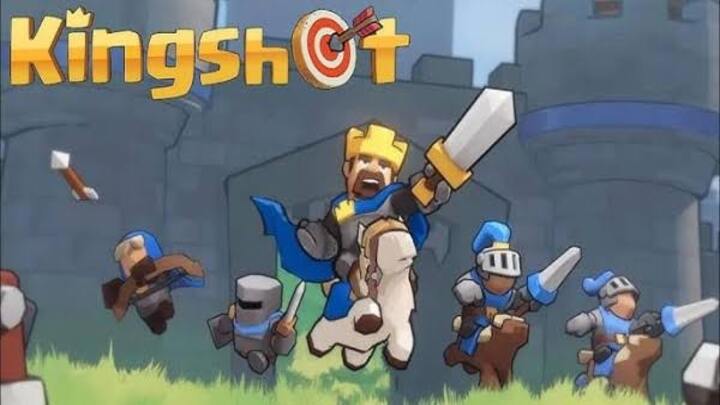
Century Games launched Kingshot in early 2025, presenting it to the global mobile gaming community as an elegant, top down tower defense survival experience. Through massive advertising campaigns, the developers showcased a game where players manually control a hero, fend off waves of rebels, and strategically build defenses in a beautiful, stylized medieval setting. However, players who downloaded the application quickly discovered that the marketing materials and the initial hour of gameplay were a meticulously crafted facade. Behind the charming indie game aesthetics lies a ruthless, highly monetized 4X strategy game that strictly follows the explore, expand, exploit, and exterminate formula. This comprehensive article delves deeply into the specific issue of Kingshot's controversial bait and switch onboarding process and the subsequent survival crisis faced by Free to Play players. We will explore how the underlying mechanics force low spenders into a grueling, month long cycle of resource deprivation, strict event hoarding, and psychological endurance just to remain marginally relevant in the cutthroat endgame of Kingdom versus Kingdom warfare.
The Illusion of the First Hour The Bait and Switch Onboarding
When a new player opens Kingshot for the very first time, they are greeted with a gameplay loop that perfectly mirrors the advertisements. You are placed in a small, self contained map where your primary objective is to defend a central keep from incoming waves of enemies. The mechanics are simple yet highly engaging. You walk your hero around the battlefield, automatically attacking foes, while spending limited starting resources to place archer towers, walls, and barracks. This phase of the game feels incredibly rewarding. It demands genuine tactical positioning and quick reflexes. The visual style, pacing, and camera angles bear a striking resemblance to critically acclaimed indie games, creating an immediate sense of comfort and quality for the player. The game generously hands out early rewards, ensuring that the player feels powerful and fully in control of their strategic destiny.
However, this engaging tower defense phase is nothing more than a psychological hook designed to secure the player's initial investment of time and attention. Mobile game developers understand that the hardest part of user acquisition is keeping a player engaged past the first twenty minutes. By simulating a premium, skill based indie experience, Kingshot effectively bypasses the initial skepticism most gamers have toward mobile titles. The player becomes invested in leveling up their starting hero and upgrading their little fortress, entirely unaware that the core mechanics are about to undergo a radical, irreversible transformation. The tower defense stages slowly become less frequent, replaced by mandatory tutorials on world maps, resource gathering, and alliance joining.
The Indie Inspiration Facade
The specific use of the indie aesthetic is a calculated move to lower the player's guard. The community has frequently pointed out that the visual charm is merely a shell. Once the onboarding is complete, the manual combat is stripped away. The player is no longer a hero actively dodging enemy fire on a dynamic battlefield. Instead, they are abruptly transitioned into the role of a disconnected governor, staring at static menus, progress bars, and premium currency storefronts. This transition is not a gentle evolution of gameplay but a hard bait and switch that leaves many players feeling manipulated, yet already too invested to simply uninstall the application.
The Abrupt Pivot From Indie Defender to Cutthroat Strategy
The moment the training wheels come off, Kingshot reveals its true identity as a heavy 4X strategy game. The quaint tower defense maps are replaced by a massive, shared server grid teeming with thousands of other players, resource nodes, and rebel camps. Your progression is no longer determined by your ability to actively dodge enemy attacks or place towers in optimal chokepoints. Instead, progression is entirely locked behind real time timers. Upgrading your headquarters, training troops, and researching technologies suddenly take hours, then days, and eventually weeks to complete. The game introduces a dizzying array of currencies, from basic wood and meat to premium gems and exclusive event tokens, fundamentally shifting the cognitive load from action strategy to spreadsheet management.
This abrupt pivot is incredibly jarring for the Free to Play community. The game introduces a VIP system, battle passes, and daily packs that immediately create a vast power disparity between players who spend money and those who do not. The base building aspect, which initially felt like a fun side activity to support your tower defense efforts, becomes the absolute core of the experience. You are forced to join an alliance not for the joy of cooperative gameplay, but for basic survival. Without the protection of a large group and the timer reduction benefits provided by alliance members, progression slows to an agonizing crawl. The game morphs from a relaxing single player challenge into a highly competitive, anxiety inducing social obligation.
The Reality of Timers and Upgrades
In this new reality, every single action requires a calculated assessment of time and resources. Want to upgrade your archery camp? That will take four days. Want to heal your troops after a minor skirmish with a neighboring governor? That will consume half of your food reserves and take twelve hours. To bypass these timers, the game constantly pushes the player toward the premium store, offering speedups and resource bundles for real world money. For the Free to Play player, the game becomes an exercise in extreme patience, where playing the game often means logging in for five minutes to click a few buttons and then logging out to wait for a timer to finish.
The True Cost of Power Pay to Win Mechanics Revealed
As players transition deeper into the mid game, the true extent of Kingshot's monetization system becomes painfully apparent. The game is meticulously designed to generate maximum revenue by creating artificial friction that can only be smoothly bypassed with cash. One of the most glaring examples of this is the hero upgrade system. Heroes are the absolute backbone of a player's military strength. A player with highly upgraded, maximum level heroes can easily obliterate an opponent with a vastly larger army but weaker commanders. However, acquiring and upgrading the best heroes is intentionally locked behind lottery mechanics, specifically the Hero Roulette and the Hall of Heroes events.
To maximize a premium hero, a player needs hundreds of specific hero shards, which are notoriously difficult to obtain without spending money. Furthermore, the game introduces secondary and tertiary progression systems like gear upgrades, widgets, and charm materials. Each of these systems has its own unique currency and upgrade materials, intentionally obfuscating the true cost of reaching maximum power. When a new system is introduced, the initial upgrades are cheap, giving the player a rush of progression. But the scaling cost quickly becomes exponential, creating an insurmountable wall for anyone not willing to swipe their credit card on a regular basis.
The True Gold Economy
The most controversial currency introduced in the later stages of the game is True Gold. This highly restricted currency is practically required to compete at the highest levels of server wide events. While low spenders might be able to scrape together a few pieces of True Gold through intense grinding, the top players are purchasing it in massive bulk packages. The community frequently highlights the absurdity of the True Gold economy, noting that achieving the top rank in major events often requires spending more money on True Gold than the actual monetary value of the rewards provided by the event itself. This proves that the system is designed to prey on ego and competitive nature rather than providing a fair gameplay experience.
The Plight of the Free to Play Governor A Strategy of Deprivation
For the player who refuses to spend money, or the low spender who only buys the occasional builder queue expansion, Kingshot becomes a completely different game. It is no longer a game of dominating the server; it is a game of surviving the server. The F2P governor must adopt a mindset of absolute deprivation. Every single resource, speedup, and gem must be heavily guarded and scrutinized before use. You cannot simply upgrade a building because you have the resources; you must wait for a specific event that rewards you for upgrading that building. You cannot train troops just to build your army; you must wait for a troop training event to maximize the return on investment.
This extreme deprivation completely strips away the spontaneous joy of playing a video game. The player is forced to strictly follow the in game calendar, planning their upgrades and activities days or even weeks in advance. If a player makes the mistake of using their speedups on a Tuesday when the building event does not start until Thursday, they have effectively set their account progress back by a significant margin compared to their peers. This punishing system ensures that F2P players are always operating at a deficit, constantly feeling behind, and always tempted to spend just a little bit of money to catch up to the rest of their alliance.
The Arms Race of Power
The game is fundamentally an arms race. The F2P player is trying to run a marathon while dragging a heavy weight, while the paying players are driving sports cars. The only way for the F2P player to not be entirely crushed is to optimize every single aspect of their account. They must understand the exact mathematical return on investment for every action. They must meticulously manage their Drill Camp, ensuring their top five highest level heroes are perfectly balanced to elevate the rest of their roster. It is a grueling, thankless task that transforms a game of medieval conquest into a part time job of inventory and schedule management.
Event Hoarding The Only Path Forward for Low Spenders
Because spontaneous gameplay is heavily punished, the entire F2P meta of Kingshot revolves around one singular concept which is event hoarding. The developers run a continuous, rotating schedule of events that reward players for consuming specific items. There are events for using speedups, events for consuming hero shards, events for spending gems, and events for increasing overall power. To have any hope of earning the top tier rewards which are crucial for long term progression, a F2P player must hoard their resources for months at a time, ignoring all lower tier events to save up for one massive push.
The discipline required to successfully hoard in Kingshot is immense. A player might sit on tens of thousands of gems and thousands of hours of speedups, watching their alliance mates grow stronger while they artificially stunt their own growth. They must resist the urge to upgrade their headquarters, even when they have all the required materials, simply because the timing is wrong. They must carefully monitor the five day event calendar outlook, calculating exactly how many resources they need to hit the maximum milestone for an upcoming event. When the event finally arrives, they unleash all their hoarded resources in a single, massive burst of progression, only to immediately begin the hoarding cycle all over again.
The Calendar of Deprivation
To master the F2P lifestyle, players must adhere to a strict set of rules based on the event calendar. The strategies are rigid and unforgiving.
- Save every single gem exclusively for the Hero Roulette and Hall of Heroes to guarantee premium hero shards.
- Never consume building speedups unless a specific building event is active and the building speed decree is turned on.
- Hoard advanced teleporters and combat buffs strictly for Kingdom versus Kingdom combat.
- Keep all consumable point generating items in the backpack indefinitely until a major seasonal event demands them.
- Delay major power upgrades until the specific phase of an event that rewards total power increase.
These rules dictate every login session, turning the game into a meticulous accounting exercise rather than a medieval battle simulator.
The Greatest Governor Event The Ultimate Whale Playground
The pinnacle of the Kingshot event cycle is the Greatest Governor event. This multi day gauntlet tests every aspect of a player's account, from resource gathering and troop training to monster hunting and player versus player combat. It is designed to be the ultimate showcase of power and dedication. However, in reality, the Greatest Governor event is an exclusive playground for the server's biggest spenders. The point requirements to reach the top ten on the leaderboard are so astronomically high that it is mathematically impossible for a F2P player to achieve them without having hoarded resources for well over a year.
During the Greatest Governor event, the F2P strategy shifts from attempting to win to attempting to extract minimum value without losing existing assets. Low spenders will aim only for the baseline milestone rewards, completely ignoring the competitive leaderboard. They will train just enough troops to get the minimum rewards, use just enough speedups to hit the lowest tier, and then immediately stop. Participating any further is a trap designed to drain their carefully hoarded reserves. The top ranks are strictly reserved for players willing to drop hundreds, if not thousands, of dollars over a single weekend to secure the exclusive hero shards awarded to the victors.
The Illusion of Competition
The developers market the Greatest Governor as a test of skill and strategy, but the community is acutely aware of the illusion. It is not the most strategic player who wins; it is the player with the highest credit limit. The event often devolves into an absurd spectacle where rival spenders burn through massive amounts of True Gold and premium speedups just to outbid each other for the number one spot. For the F2P player watching from the sidelines, the event is a stark reminder of their place in the game's hierarchy. They are not the main characters of the server; they are the background extras providing content and targets for the paying players.
Navigating Hero Roulette and Hall of Heroes
For a low spender, heroes are the single most important investment in the game. Upgrading buildings and training millions of low tier troops means nothing if your army is led by a weak commander. The primary avenues for acquiring the best heroes in Kingshot are the Hero Roulette and the Hall of Heroes events. The Hero Roulette operates on a pure probability system, requiring players to spend gems for a chance to win hero shards. The system is designed with a pity mechanic, meaning that a player must spin a specific number of times to guarantee the top reward. Therefore, spinning the roulette without having enough gems to hit the guarantee timer is considered the absolute worst mistake a F2P player can make.
F2P players will spend months accumulating gems through daily tasks, alliance gifts, and minor event rewards, stubbornly refusing to spend a single gem on anything else. They will watch multiple Hero Roulette events pass them by, waiting until their gem stockpile reaches the critical threshold required to guarantee a massive payout. When they finally commit, they spend everything, instantly elevating their main hero to a competitive level. This requires immense patience and self control, as the game constantly bombards the player with pop up offers and limited time discounts trying to bait them into spending their gems prematurely.
Strategic Gem Allocation
The Hall of Heroes is a similar system, often requiring the strategic use of keys or tokens that must be hoarded over multiple event cycles. A seasoned F2P player knows exactly how many keys are required to clear the event and will not participate until that number is reached. This hyper focused approach to gem and token allocation is the only way to build a hero roster capable of surviving the late game. Every gem spent on a temporary shield, a random speedup, or a minor resource pack is a gem stolen from the player's future potential in the Hero Roulette.
Kingdom Versus Kingdom The Climax of Resource Burning
The ultimate endgame activity in Kingshot is the Kingdom versus Kingdom event, commonly known as KvK. This massive server wide war pits entire kingdoms against each other in a battle for supreme dominance, control of the central castle, and exclusive resource nodes. During KvK, the gloves come off, and the true disparity between F2P players and heavy spenders is put on full display. The server's top alliances must coordinate their attacks, designate defensive roles, and manage their troop deployments with military precision. However, for the low spender, KvK is a terrifying meat grinder that can erase months of careful progress in a matter of minutes.
In KvK, the primary role of the F2P player is to serve as a supportive garrison or to join massive rally attacks led by the alliance's strongest members. A F2P player cannot attack a strong enemy directly; doing so would result in the instant annihilation of their entire army. Instead, they must rely on the protective umbrella of their paying alliance mates. Even in a supportive role, the cost of participation is staggering. The amount of troops severely wounded or killed during the intense castle sieges requires an astronomical amount of resources and healing speedups to recover.
The Healing Bill Crisis
The most devastating aspect of KvK for a low spender is the healing bill. After a major battle, a player might find their hospitals overflowing with wounded soldiers. Healing these troops takes millions of units of food and wood, and weeks of real time waiting if speedups are not used. A F2P player might burn through their entire stockpile of hoarded resources just to heal their army after one weekend of KvK combat. It forces the player to ask themselves if the meager rewards provided by the event are truly worth the catastrophic loss of resources. Often, F2P players will sit out the most brutal phases of KvK, choosing to preserve their troops rather than sacrifice them for the glory of their server's biggest spenders.
The Social Lifeline Alliances and Protection
Given the extreme hostility of the game's mechanics toward non paying players, the only way to survive long term in Kingshot is through diplomacy and social integration. Being part of a top tier alliance is not optional; it is a fundamental requirement for survival. Alliances provide essential buffs, reduction in building timers, and most importantly, access to the premium gift boxes generated whenever a member of the alliance makes a real money purchase. In a top alliance heavily populated by spenders, the F2P members can slowly absorb the secondary rewards generated by the spenders, accelerating their own progress significantly compared to playing completely solo.
However, earning a spot in a top alliance requires extreme dedication. Since F2P players cannot contribute massive combat power, they must compensate by being hyper active. They must constantly gather resources for the alliance, participate in every single cooperative event, donate heavily to alliance technology, and follow the strict orders of the alliance leadership. They must be online during crucial KvK battles to fill rally capacity and reinforce defensive structures. The F2P player essentially trades their time and labor for the protection and financial runoff provided by the alliance's big spenders.
Symbiotic Relationships in the Kingdom
This creates a fascinating, almost feudal symbiotic relationship within the game. The heavy spenders need the F2P players to fill their massive rally capacities and manage the tedious, time consuming tasks of territory expansion. In return, the F2P players need the big spenders for absolute protection against rival kingdoms and to provide the premium gift chests that make F2P progression possible. A smart F2P player understands their place in this ecosystem, acting as a loyal soldier and a reliable active participant to ensure they are never kicked out of the protective bubble of the top alliance.
The Future of Kingshot Can the F2P Ecosystem Survive
As Kingshot continues to generate tens of millions of dollars in revenue each month, the future of its Free to Play ecosystem remains highly uncertain. The developer's strategy of running endless creatives featuring fake survival stories to draw players in, only to trap them in a highly monetized 4X grind, is incredibly lucrative. However, it also creates a massive churn rate. F2P players are constantly burning out from the sheer exhaustion of event hoarding, the punishing consequences of making a single mistake, and the demoralizing realization that they will never truly be competitive. If the game pushes the monetization too far, the F2P population will collapse entirely.
Without a healthy population of active low spenders, the massive spenders will have no one to rule over, no one to fill their rallies, and no one to defeat in battle. A kingdom composed entirely of massive spenders quickly becomes stagnant and boring. Century Games must walk a very delicate tightrope. They must continue to introduce new progression systems like island scrolls, widgets, and artisan gear to keep the spenders engaged, but they must also provide just enough breadcrumbs to keep the F2P players logging in.
The Balancing Act of Century Games
If the developers fail to alleviate the extreme pressure of the healing bills, or if they continue to make events completely mathematically impossible for hoarders to achieve, the game risks a mass exodus. The bait and switch marketing can bring millions of players through the front door, but only a balanced, rewarding, and fair progression system can keep them playing for years. Until the developers address the massive power creep and the punishing deprivation required to play for free, Kingshot will remain a fascinating, frustrating study in extreme mobile game monetization.
Conclusion
In conclusion, Kingshot is a masterclass in psychological manipulation and aggressive mobile monetization. By luring players in with a beautiful, indie inspired tower defense game and abruptly forcing them into a brutal 4X strategy war, the game creates an incredibly hostile environment for Free to Play users. The only way to survive the grueling endgame of Kingdom versus Kingdom combat is through absolute discipline, social subservience to big spenders, and months of meticulous event hoarding. While the game provides deep strategic depth and engaging social dynamics for those who can afford it, it stands as a stark warning to the average player about the true cost of modern mobile gaming.
Kingshot uses a deceptive tower defense intro to trap players in a brutal pay to win strategy game forcing free to play users into extreme event hoarding to survive.