.webp)






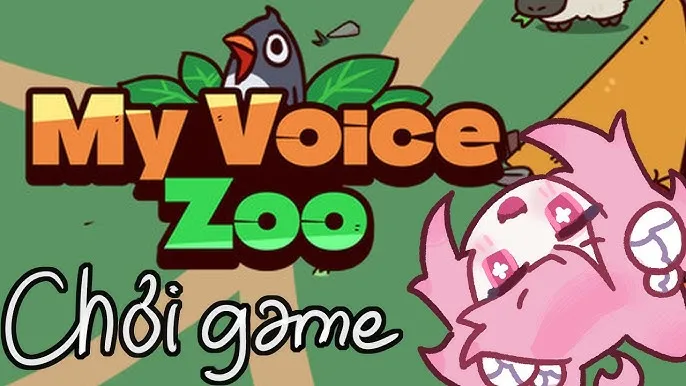
In MyVoiceZoo, the act of speaking into a microphone becomes far more than a playful mechanic—it becomes the foundation of an entire economic and emotional system. Unlike traditional idle or simulation games where value is derived from optimization or time investment, this game transforms something deeply human—your voice—into a persistent, productive resource. Every recorded sound is not only an expression but also an asset, continuously echoed by digital creatures that generate in-game value over time.
This article explores the concept of the “echo economy” within the game: a system where sound is not just input but a lasting identity, a looped presence, and a form of currency. By examining how voice evolves from a simple recording into a layered, self-sustaining system, we uncover how MyVoiceZoo reshapes the relationship between player, time, and value.
1. The Origin of Voice as Asset
The first moment a player records a sound is deceptively simple. Yet this act marks a fundamental shift: the player is no longer interacting with predefined assets but actively creating them. The recorded voice is immediately embedded into the game’s system, assigned to an animal, and set into motion as a repeating loop. Unlike choosing a skin or character, this is an act of authorship—personal, irreversible, and uniquely tied to the player.
This origin point establishes the rules of the echo economy. Voice is not temporary; it persists. Each sound becomes a unit of identity that cannot be separated from the player who created it. Over time, these sounds accumulate, forming the foundational “inventory” of the zoo—not as objects, but as echoes of past moments.
Voice as Imprint
The recording captures more than sound—it captures context, emotion, and spontaneity. A quick laugh, a strange noise, or a carefully crafted imitation all carry different meanings, yet the system treats them equally.
Irreversible Creation
Once embedded, the sound becomes part of the zoo’s permanent environment, reinforcing the idea that every action leaves a trace.
2. Repetition and the Birth of Value
Once recorded, the sound begins to repeat automatically. This repetition is not merely aesthetic; it is functional. Each loop represents production, turning the voice into a generator of value. The more frequently an animal “speaks,” the more it contributes to the player’s progression.
Repetition also introduces familiarity. What begins as a novel or amusing sound gradually becomes part of the ambient environment. The player begins to recognize patterns, rhythms, and overlaps, creating a dynamic soundscape that evolves over time. In this sense, value is not only numerical but experiential.
Sound as Production
- Each repetition generates in-game currency
- Output is continuous and passive
- Value scales with time
Familiarity Through Looping
- Sounds become recognizable markers
- Patterns emerge naturally
- The zoo evolves into a sound ecosystem
3. The Collapse of Traditional Optimization
In most games, players are encouraged to optimize—choosing the most efficient strategy to maximize output. In MyVoiceZoo, this paradigm is intentionally dismantled. All sounds, regardless of quality or complexity, generate value equally.
This design choice removes pressure and shifts the focus from performance to expression. Players are free to experiment without fear of inefficiency. The echo economy thrives not on precision but on diversity, encouraging a wide range of inputs that reflect the player’s mood, creativity, and spontaneity.
Equal Value System
- No “best” sound exists
- Creativity replaces optimization
- Every input is valid
4. Time as an Amplifier
Time plays a crucial role in expanding the echo economy. As an idle system, the game continues to operate even when the player is absent. Sounds continue to loop, animals continue to produce value, and the zoo evolves in the background.
Over extended periods, time amplifies the significance of each recording. A sound that initially seemed trivial becomes a constant presence, repeated hundreds or thousands of times. This repetition transforms fleeting moments into enduring elements of the game world.
Passive Continuity
- The system runs without player input
- Voice persists beyond interaction
Accumulated Presence
- Time increases both value and familiarity
- Sounds gain emotional weight
5. The Emergence of Sonic Identity
As more sounds are added, the zoo begins to reflect the player’s identity. Each recording captures a specific moment—whether playful, experimental, or intentional. Together, these sounds form a layered representation of the player’s behavior and personality.
This sonic identity is unique and unrepeatable. No two players will create the same combination of sounds, and even the same player cannot recreate the exact conditions of a previous recording. The zoo becomes a living archive, preserving fragments of time through sound.
Identity Through Sound
- Each recording reflects a moment
- The zoo becomes autobiographical
6. Chaos and Structure in Sound Design
Players naturally gravitate toward different approaches in shaping their zoo’s soundscape. Some embrace chaos, recording random noises and allowing the system to evolve unpredictably. Others seek structure, carefully curating sounds to create a cohesive auditory environment.
These contrasting approaches highlight the flexibility of the echo economy. It accommodates both spontaneity and intentionality, allowing players to define their own relationship with the system. The resulting soundscape becomes a reflection of these choices, influencing how the game is experienced over time.
Two Approaches
- Chaotic: random, playful, unpredictable
- Structured: intentional, curated, consistent
7. Humor as a Reinforcing Mechanism
One of the most powerful aspects of the echo economy is its ability to generate humor. Hearing one’s own voice played back in unexpected ways creates a sense of surprise and amusement. This emotional response reinforces engagement, encouraging players to continue experimenting with new sounds.
Humor also adds a social dimension, even in a single-player context. Players may imagine how others would react to their zoo, turning the act of recording into a form of performance. The echo economy thus becomes not only a system of value but also a medium of expression.
Emotional Feedback
- Surprise from playback
- Laughter drives engagement
8. The Limits of Repetition
Despite its strengths, the echo economy is not without limitations. Over time, repetition can lead to fatigue. Sounds that were once amusing may become monotonous, reducing their emotional impact.
Creative exhaustion can also occur. Players may feel that they have explored all possible variations, leading to a decline in engagement. These limitations are inherent to a system that relies heavily on player-generated content.
System Constraints
- Repetition may reduce novelty
- Creativity can plateau
9. Expansion Beyond the System
Some players extend the echo economy by incorporating external tools, such as voice changers or soundboards. These additions introduce new layers of complexity, allowing for more diverse and imaginative recordings.
This expansion demonstrates the adaptability of the system. The echo economy is not confined to the game itself—it can integrate with external technologies, broadening its scope and potential.
External Creativity
- Voice modifiers expand possibilities
- The zoo becomes a creative platform
10. The Philosophy of Presence
At its core, the echo economy represents a philosophy of presence. Your voice, once recorded, continues to exist within the game, repeating endlessly and generating value. This creates a subtle but powerful sense of continuity—a digital extension of the self.
Unlike competitive systems that emphasize achievement, this model emphasizes existence. The player’s contribution is not measured by success or failure but by presence and expression. The game becomes a space where being is enough.
Presence Over Performance
- No pressure to win or optimize
- Expression defines progress
Conclusion
The echo economy of MyVoiceZoo redefines how value is created and experienced in games. By transforming voice into a persistent, productive resource, it blurs the line between expression and progression. Each sound becomes a fragment of identity, repeated over time and woven into a living system that exists because the player gave it voice.
In doing so, the game offers a unique perspective on what it means to create, to persist, and to be present within a digital world. It shifts the focus away from competition and efficiency, replacing them with creativity and continuity. The result is not just a game, but a space where voice becomes memory—and memory becomes value.
MyVoiceZoo turns voice into value, creating a system where sound, identity, and time merge into a persistent and deeply personal experience.